Suicide Prevention
One Veteran. One Life. One Reason to Reach Out.
22 A Day Is NOT Okay
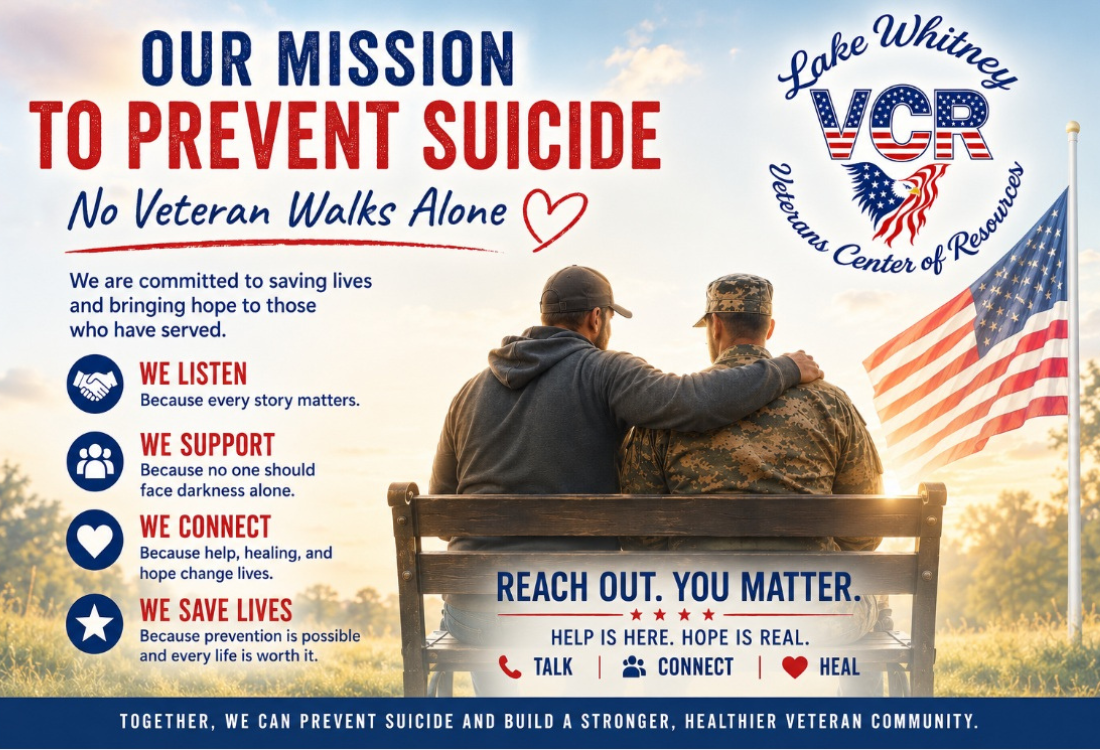
At Lake Whitney Veterans Center of Resources (VCR), we believe suicide prevention starts with something simple—but incredibly important: connection.
Veterans can face challenges that are difficult for others to see. Sometimes a veteran who is struggling may not say they need help. They may withdraw, become quiet, seem overwhelmed, or simply say, “I’m fine.”
Recognizing those changes—and knowing what to do next—can make a difference.
That is why our team took part in S.A.V.E. Suicide Prevention Training. We wanted to be better prepared to recognize warning signs, have difficult conversations, and know how to connect a veteran with appropriate resources and support.
The training reminded us that we don’t have to have all the answers. Sometimes our most important job is simply to listen without judgment, ask the question, stay connected, and help that veteran find the next step.
What Does S.A.V.E. Mean?
S — Spot the Signs: Recognize warning signs that a Veteran may be thinking about suicide.
A — Ask the Question: Ask the critical question: “Are you thinking about killing yourself?”
V — Validate: Listen and acknowledge the Veteran’s experience without judgment.
E — Encourage and Support Next Steps: Help the Veteran connect with appropriate resources and ongoing support.
Suicide Prevention Is Part of Our Arsenal
For VCR, suicide prevention isn’t just a training class. It is another tool we can add to our arsenal as we work to serve Veterans and their families.
Whether someone needs help finding housing, food, transportation, VA resources, emergency assistance, or simply someone willing to listen, we want Veterans to know:
You don’t have to face your challenges alone.
We may not always know what someone is carrying, but we can choose to reach out.
And you can take the VA S.A.V.E. Training Program, too. It is not just for Veterans. Learning how to recognize the signs and respond with care can help anyone be better prepared to support someone who may be in crisis.
One conversation can open a door.
One connection can create hope.
One Veteran’s life matters.
One Veteran. One Life. One Reason to Reach Out.
Need Help Right Now?
If you are in immediate danger, call 911.
For immediate crisis support in the U.S., call or text 988 and press 1 to reach the Veterans Crisis Line. You can also chat online through the Veterans Crisis Line or text 838255.
VA S.A.V.E. Suicide Prevention Training | PsychArmor
You don’t have to know exactly what to say. Sometimes simply being there is the first step toward hope.
Leave a Reply